SIZE
One rule, every size
A0 is one square metre. Halve it for A1, again for A2, and so on down to A4.
Try the size check doodleposter
SIZES, PIXELS AND LIGHT
A good poster starts with the right size and ends on the right wall.
Check a print size
A0 = 1 m²halve it
Paper sizes follow one neat rule, a sharp print needs enough pixels, and light slowly fades what it falls on. Here is what the standards, librarians and conservators say, in plain English.
Plain English, with the sources linked.
At a glance
841 × 1189 mm
The size every A sheet comes from
That is A0, an area of one square metre. Each smaller size is the one above cut in half across its long side, and every sheet keeps a height-to-width ratio of about 1.4142.
PAPER · ISO 216
50,000 lux hours
A yearly light budget for paper
A conservation centre gives this as an ideal annual exposure for paper on display. At 50 lux for 10 hours a day it is used up in about 100 days; at 100 lux, in about 50.
LIGHT · CONSERVATION
TWO NUMBERS WORTH KNOWING
One number sets every paper size.
The other sets how long paper can face light.
Museums work to tight light limits because the damage cannot be undone. A home is not a museum, but the same logic explains why a poster in a sunny spot fades first.
A QUICK SIZE CHECK
Pick a poster size to see its dimensions and the image size it needs at 300 dots per inch, the minimum a university library poster guide gives as a good rule of thumb.
Pixel counts are our own arithmetic: millimetres ÷ 25.4 × 300. The bar shows the paper area relative to A0.
THE SHORT ANSWER
Three things decide whether a poster
looks good and stays that way.
SIZE
A0 is one square metre. Halve it for A1, again for A2, and so on down to A4.
Try the size checkSHARPNESS
A common rule of thumb is at least 300 dpi at the printed size, so big prints need big files.
Before you printSHADE
Fading from light is cumulative and irreversible, so where you hang a print matters.
See the numbers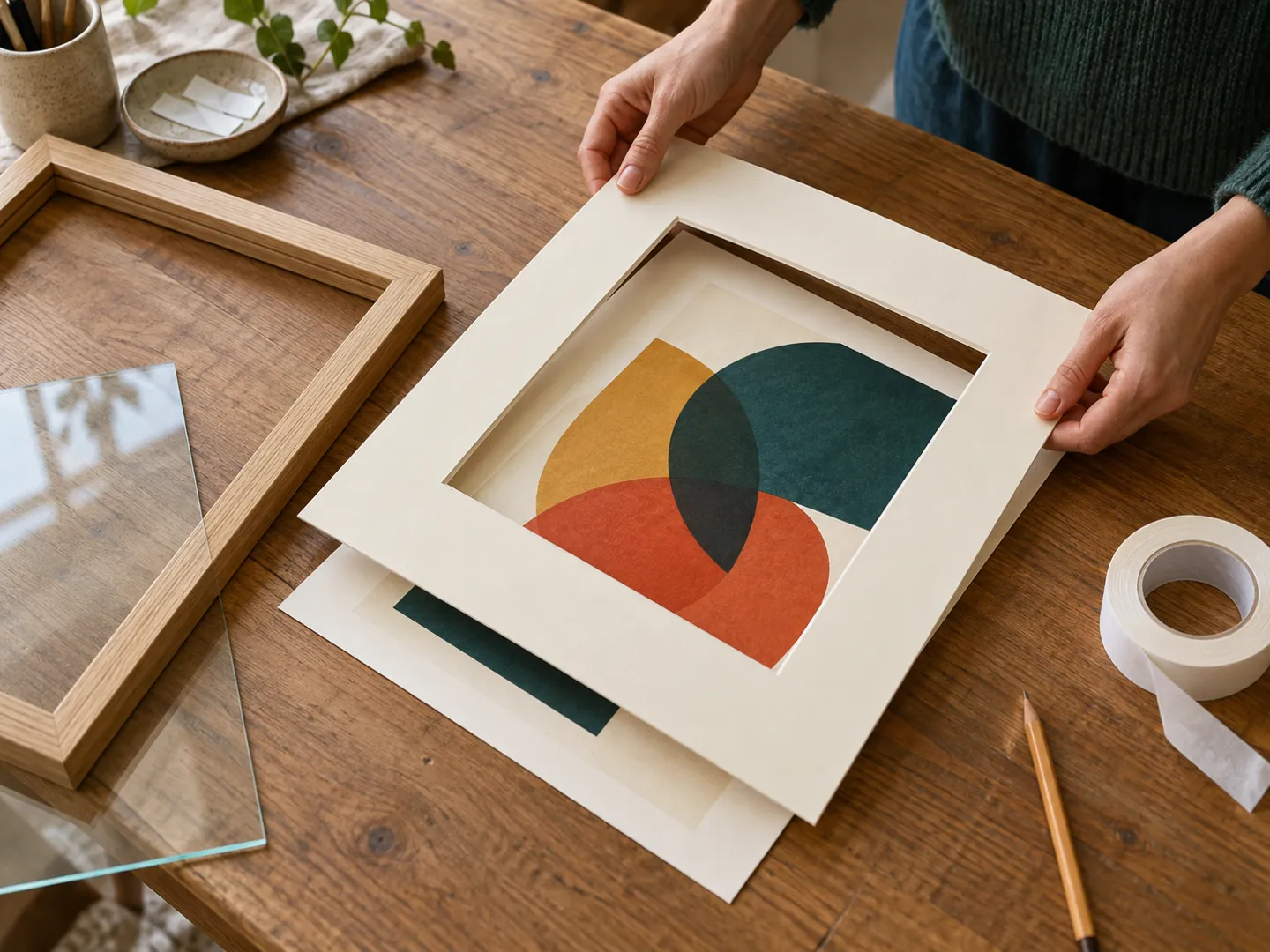
HANG IT WELL
Look at the image's pixel dimensions before you order a print. Divide by 300 to see how many inches it covers at the rule-of-thumb resolution.
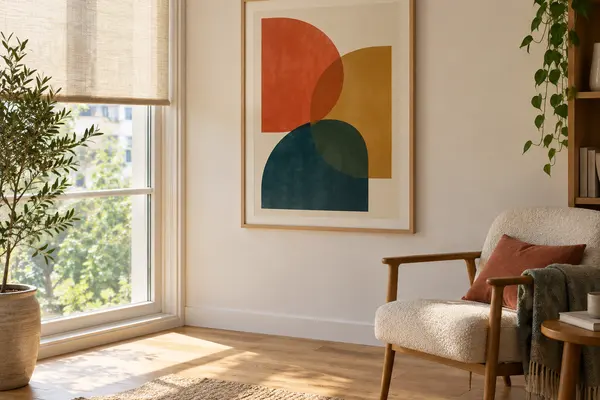
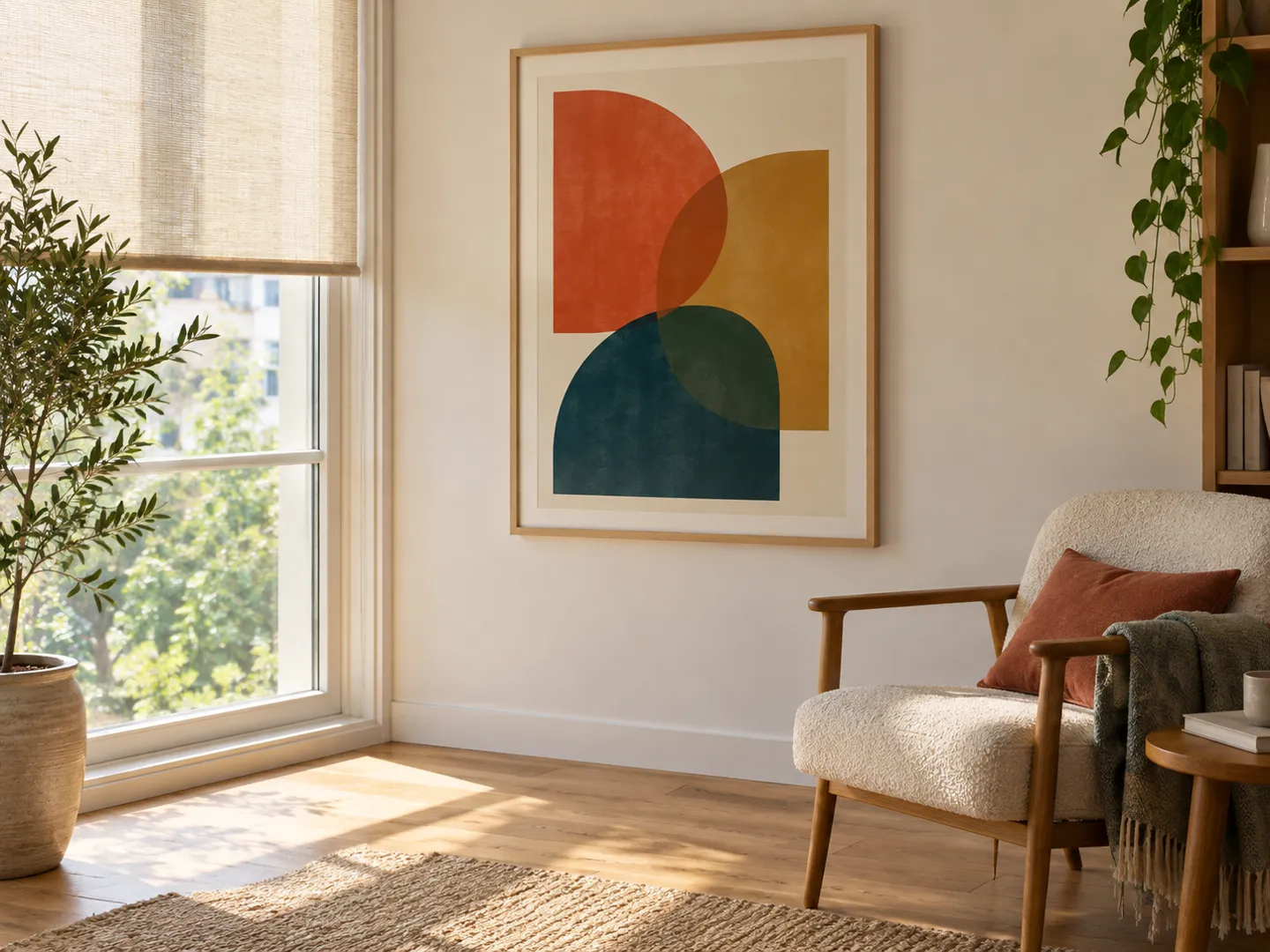
Hang it out of direct sunlight and away from radiators, working fireplaces and air vents, as the Library of Congress advises for framed paper.
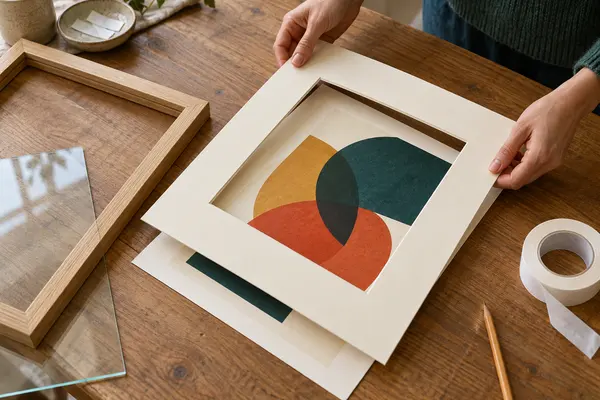
Use mat board of cotton rag or purified, lignin-free pulp, and UV-filtering glass or acrylic if the room gets daylight.
A window mat or spacers stop the poster from touching the glazing. For a precious original, consider framing a copy instead.
POSTER FACTS
A0 measures 841 × 1189 mm. A1 is 594 × 841, A2 is 420 × 594, A3 is 297 × 420 and A4 is 210 × 297 mm.
Every A size has the same proportions, height divided by width equals about 1.4142, so halving a sheet never changes its shape. The system became the German standard DIN 476 in 1922.
The V&A credits Jules Chéret with the first colour lithograph posters in 1866, building on the lithography process Alois Senefelder invented in 1798.
Conservators describe light damage as cumulative and irreversible. Low light for a long time can do as much harm as bright light for a short time.
Daylight and fluorescent tubes carry more ultraviolet than other lighting, which is why archive guidance suggests UV-filtering glazing for prints displayed near them.
QUICK QUESTIONS
Short answers to the questions people ask most.
A2 measures 420 × 594 mm. It is half of A1 (594 × 841 mm) and twice the size of A3 (297 × 420 mm), because each A size is made by cutting the one above it in half.
A university library poster guide gives a minimum of 300 dpi as a good rule of thumb, with larger prints needing more. At 300 dpi, an A3 print works out at about 3,508 × 4,961 pixels.
Every A size has a height-to-width ratio of the square root of two, about 1.4142. Cutting a sheet of that shape in half gives two smaller sheets of exactly the same shape, so a design scales from A4 to A0 without cropping.
Light, both visible and ultraviolet, can cause fading and discolouration, and conservators describe the damage as cumulative and irreversible. Keeping a print out of direct sunlight and using UV-filtering glazing reduces it.
Archive guidance suggests displaying a copy and storing the original away from light. If an original is framed, the guidance is to use acid-free mat board, UV-filtering glazing, and a mat or spacers so the glass does not touch it.
Sources
A NAME WORTH PINNING UP
doodleposter.com is part of the DoodleSale portfolio. It isn't in an auction right now, but you can ask about leasing it.